The modeling layer for the physical economy.
What’s changing. What it changes. What you do next.
Atlas AI maps how places are changing worldwide (where people settle, what gets built, and how land is used) and models what those changes mean for the networks, investments, and programs that depend on them.
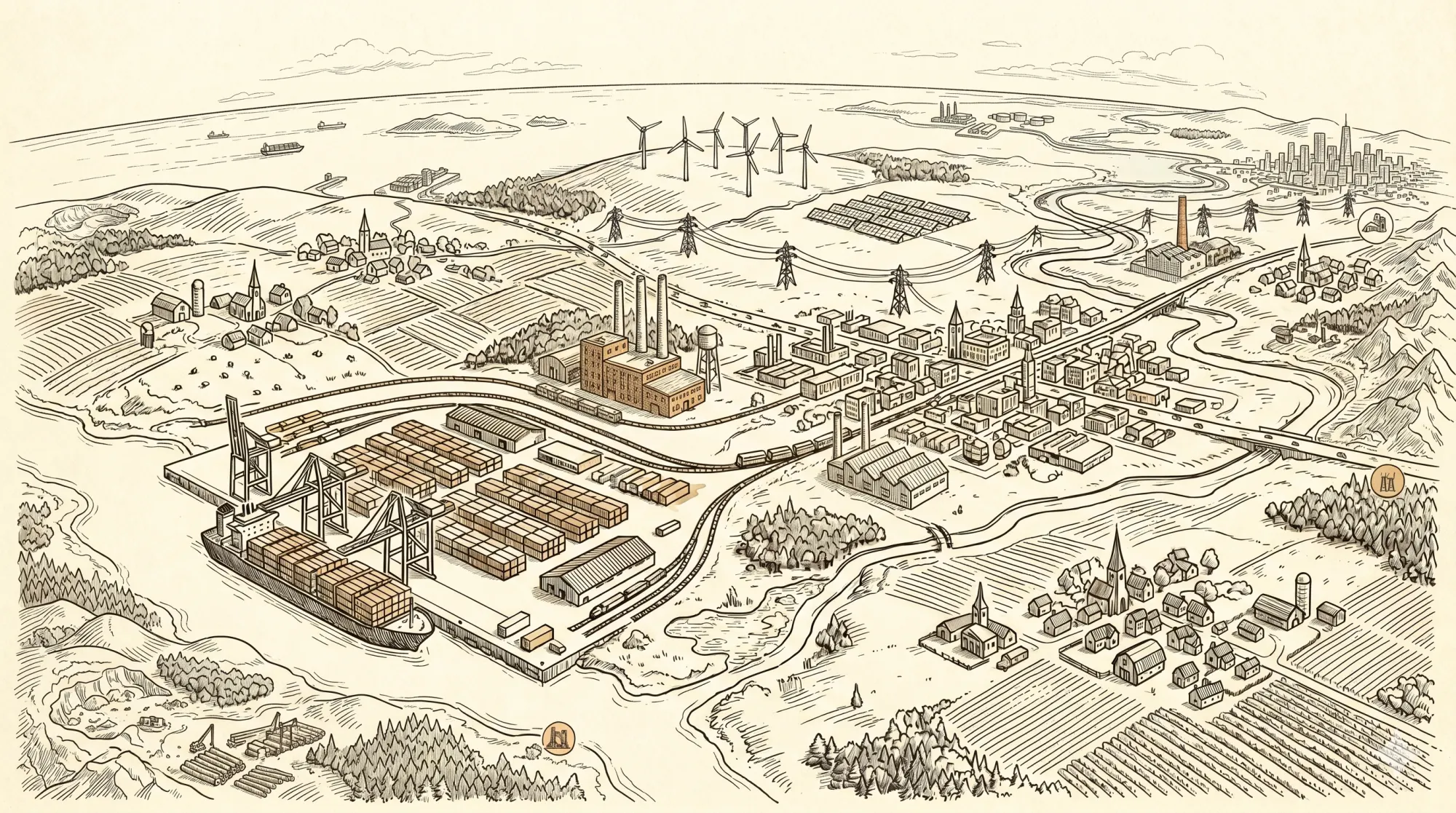
The economy is in constant motion.
Atlas AI maps construction, infrastructure, land use, and population change across entire countries.
- 1PORT THROUGHPUT+18% q/q
- 2INDUSTRIAL ACTIVITY+24 sites
- 3GENERATION CAPACITY+340 MW
- 4MIGRATION SIGNAL+9.2k arrivals
Change cascades through systems.
Atlas AI shows where that change opens opportunity or adds strain across your operating footprint.
- 1FORECAST · POWERDemand exceeds supply by 2027
- 2FORECAST · WORKFORCE+14,000 jobs — services lag 2028
- 3FORECAST · FREIGHTCorridor saturates by 2028
Position the network for what’s coming.
Atlas AI shows which moves to make, and where in the network to make them.
- 1Expand port+30% berth capacity by Q3, to clear freight throughput
- 2Add grid storage200 MW · 18-month build, to anchor industrial uptake
- 3Accelerate housing1,200 multi-unit permits, to absorb arrivals
Built for the decisions that shape the physical economy.
We model how places, networks, and markets change over time, in time for you to act.
Supply Chain & Logistics
Reroute around disruption and reposition ahead of demand.
Infrastructure & Energy
Build where demand is heading, and harden what’s exposed.
Global Health & Development
Direct resources where they do the most good, and track the change.
Financial Services & Risk
Underwrite and reprice as the ground beneath the risk keeps shifting.
Government & Public Sector
Target public investment and respond to disruption at every level.
Pulse shows what’s changing.
Foresight models what it changes, and what you do next.
Both run on Aperture®, the geospatial AI engine that powers them. Pulse works on its own, or as one of the data streams inside a Foresight deployment.
Pulse
Pulse detects construction, settlement, land use, and roads from Earth observation data across entire regions and countries, with population and economic estimates on top. It picks up change from the foundation stage, before it reaches official statistics, and delivers it as data ready for your dashboards and pipelines.


FIG. 1Around Mesa Gateway Airport, Pulse detected 553 hectares of new development since 2017.
Pulse, 10 m, 2017–2024. Contains modified Copernicus Sentinel data. Roads © OpenStreetMap contributors.
FIG. 2Forecasting demand: monthly air travel to 2030, with its likely range.
An illustrative example on public data from the US Bureau of Transportation Statistics.
Foresight
It brings together the models, the data behind them, and the infrastructure that runs them, connected to your systems. Our AI scientists, data engineers, and solutions engineers build, tune, and integrate the models with your team, for supply chains, grids, populations, and markets.
Explore Foresight →Aperture is the GeoAI engine powering Pulse and Foresight.
Modeling the physical economy is hard for reasons most AI doesn’t face. The data comes from many sources, at different scales and speeds, and up-to-date local data is scarce everywhere.
Places are also connected, so a change in one place drives change in the next. Aperture’s models follow how change spreads, and keep working where records run out.
- InputsSatellite imagery, land cover and crop maps, census and survey data, property and land records, infrastructure and facility records, and your own operational data
- Sensing modelsRead imagery and sensor data at 10 m
- Data fabricPlaces and their history, on one grid
- Model libraryTrained models, reused across deployments
- ProductsPulse, for monitoring. Foresight, for predictive models
Trusted by governments, development institutions, and enterprises worldwide.
Route-level passenger-demand forecasts, built with Airbus’s Global Markets Forecast team on Atlas AI data covering more than 190 countries, to inform supply-chain and commercial strategy. The announcement →
Network expansion in Zimbabwe planned against settlement-level demand. In Harare, new development Pulse detected in 2023 was confirmed in 2024, on land that was empty in 2021. Our partnership with Cassava Technologies →
Household spending estimated village by village around Lalaua, Mozambique, to find the poorest areas for cash transfers. GiveDirectly verified the estimates through field visits. GiveDirectly’s account →
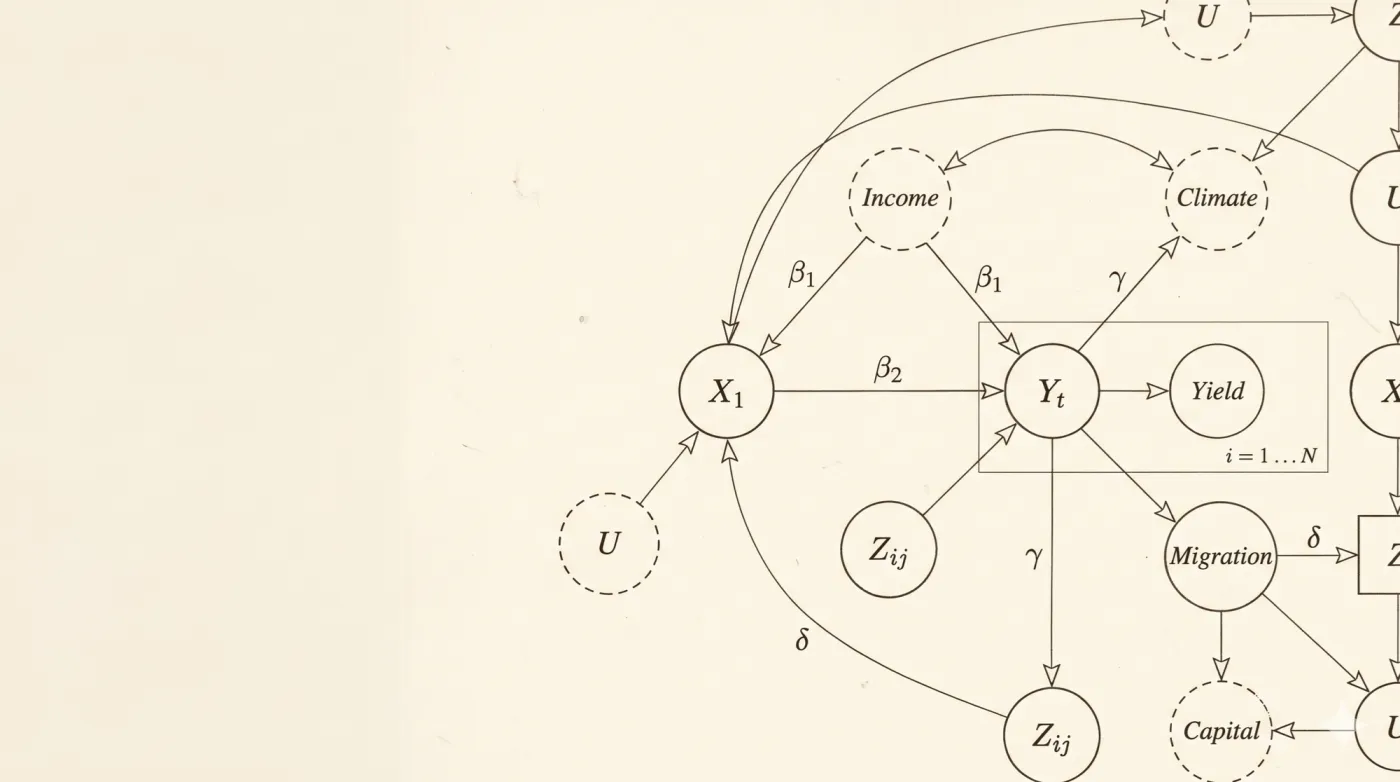
Atlas AI has been building AI for the physical world since 2018, now one of the defining frontiers in AI.
Atlas AI was founded by Stanford scientists who helped pioneer the field. At our core we are still a company of scientists and engineers — explorers working at the intersection of AI, earth science, and economic systems.
How investment, infrastructure, and risk interact across a connected system.
Multimodal sensing models trained on imagery, sensor, and field data.
Predictive models in the places that have never been well measured.
Our research appears in Nature, Applied Energy, Applied Geography, and the proceedings of Big Data from Space. Others have published work built on Atlas AI data in PNAS and Scientific Data.